
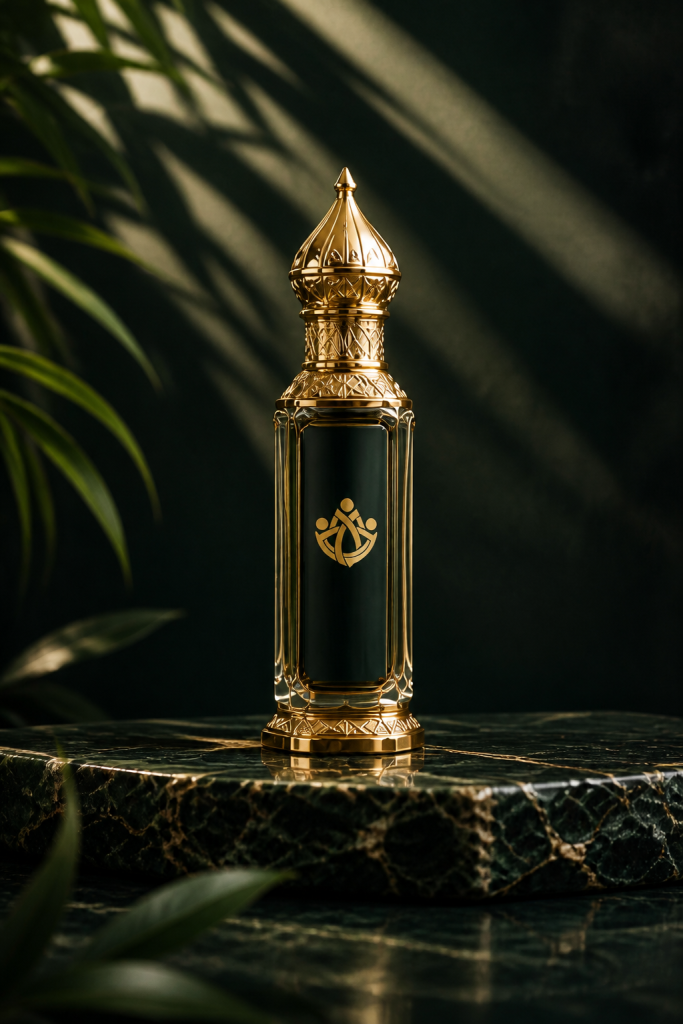
Good oud starts with a wound tree. Agarwood only produces the dark, resin-dense heartwood we prize once an Aquilaria tree has been injured or infected — the resin is the tree’s own defense response. Nothing about that process can be rushed, which is the first thing to understand about why oud commands the price and reverence it does.
We source our oud from Assam, in the northeast of India, where growers have spent decades learning to read a tree: which scars are promising, which wood is ready, and which needs another few years untouched. The agarwood we use is aged before it ever reaches distillation, allowing the resin to deepen from something sharp and green into the dark, layered material that gives TRIMEN OUD its character.
Distillation itself is slow — traditional hydro-distillation can take days rather than hours, at low heat, specifically to avoid burning off the delicate top facets of the material. Rush it, and you get something one-dimensional. Done properly, oud has movement: a smoky opening, a leathery heart, and a warm, almost sweet base that can sit on skin for the better part of a day.
What ends up in the bottle is a small fraction of the raw material we start with, and that ratio is exactly why we treat oud sourcing as a relationship rather than a transaction — the same growers, harvest after harvest, because consistency at this level takes trust as much as it takes skill.